Start with these effects
Beginner Pedalboard Essentials
Building your first pedalboard is one of the most exciting moments in any guitarist's journey. There's something magical about laying out your effects, planning your signal chain, and envisioning the sounds you'll create. But it's also easy to get overwhelmed—there are thousands of pedals out there, and everyone's got an opinion about what you "need." Here's the thing: keep it simple, start with what actually matters, and build from there.
The Best Match for Your Style
The Core Four
Most players, regardless of genre or style, end up relying on these four effect types. Master these before you even think about adding more exotic flavours.
Overdrive — This is your foundation. Whether you want a transparent boost that pushes your amp into natural breakup, or a full-on saturated distortion that screams, overdrive adds warmth, sustain, and harmonic complexity to your sound. Start here. A good overdrive is the single most versatile tool on any board.
Delay — Adds space and dimension to your playing. A well-set delay makes your guitar feel larger, more professional, and more interesting. Even a simple analog delay can transform a sparse arrangement into something with real depth. Start with something basic—you can always upgrade later.
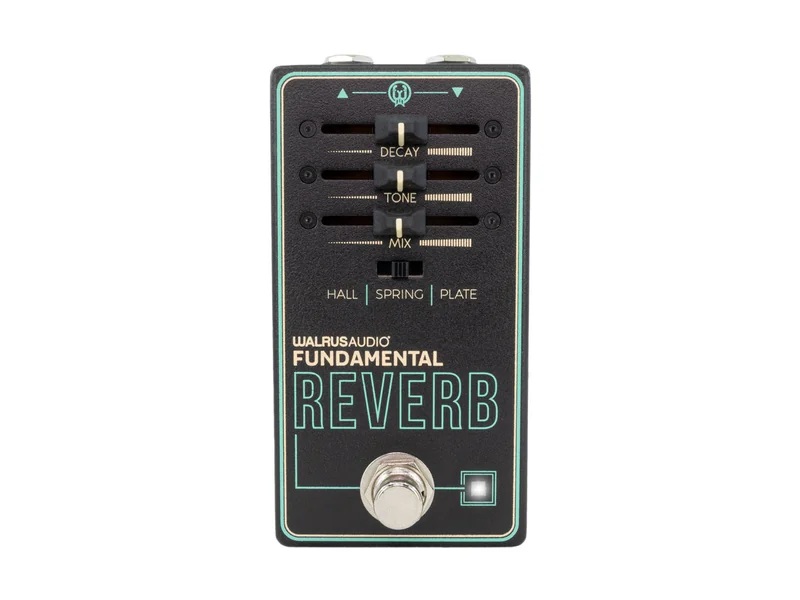
Reverb — The other half of the spatial equation. Reverb simulates the acoustics of different spaces, from a small room to a massive hall. It ties your tone together and makes everything feel like it's in the same room. Note: Check your amp first—if you already have a Reverb knob on your amplifier, you might want to prioritize the Delay pedal first.
Tuner — Every board needs one, and it goes first in your signal chain. Why? A tuner at the end struggles to read your note if drives or delays are turned on—it sees a "messy" signal. Putting it first ensures it sees the pure note from your strings. Bonus: a tuner acts as a mute switch, letting you kill the signal before hitting your noisy drive pedals.
The Secret? Go Slow
Resist the urge to buy everything at once. Build your board around how you actually play, not how you think you might play. Start with these four, learn them inside out, and only add more when you genuinely need it. Your wallet—and your playing—will thank you.
One More Secret: Buy Used
Boss pedals are legendary for being indestructible. They're built like tanks and last for decades. This means you can save 30–40% by buying second-hand. Check reverb.com, local music shops, or craigslist. A used Boss SD-1 or pedal plays exactly like a new one—and you'll pay half the price. Makes the hobby much more accessible, and you lose nothing in quality.
Next Step
Now that you understand what a pedalboard is and the four essentials, learn the correct order to arrange them on your board.
Read Part 3: Understanding Pedal Signal ChainIf you found this useful, consider buying us a coffee
Support the project