Four pillars of space: Spring, Plate, Hall, and Room
Reverb Algorithms Decoded
Reverb is the sonic glue that holds everything together—it makes a recorded guitar feel like it's in a room with you. But modern reverb pedals offer a bewildering array of algorithms. The good news: understanding the four main algorithm types (Spring, Plate, Hall, Room) will help you dial in the perfect space for any style.
The Best Match for Your Style
Industry leader in algorithmic reverb. Cloud, Bloom, and Shimmer modes are essentially their own instruments.
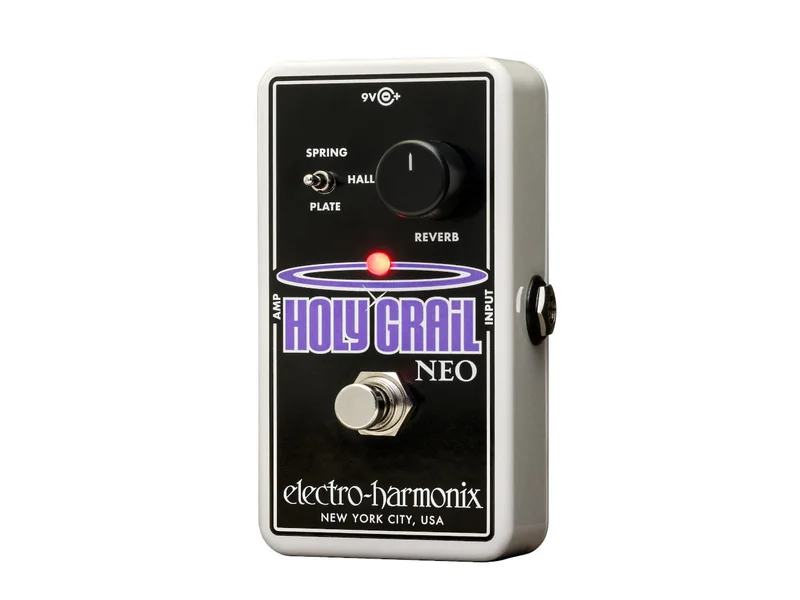
Holy Grail Neo Reverb
Electro-Harmonix
Three knobs (Spring, Hall, Plate), iconic tone, zero menus. Sounds exactly like a record without breaking the bank.
Spring Reverb
The original. Uses actual springs (in classic hardware). Repeats "bounce" and slightly degrade, creating that distinctive twang and clatter.
Often dismissed as "just for surf," but spring reverb works on clean tones across many genres. That vintage character sits perfectly in blues, jazz, and alternative rock.
Pro Tip: Best for clean tones. The bounce adds life to your notes that makes blues and surf licks come alive. Run it moderately (Mix knob around 30-40%) for natural space without losing your playing definition.
Plate Reverb
The studio standard. Uses a large metal plate that vibrates to create reverb. Dense, diffuse, with a long, beautiful decay and subtle metallic sheen.
Universe of professional recordings use plate reverb. It's smooth, forgiving, and works on literally everything.
Pro Tip: The secret for lead guitar. Because it's so smooth and uniform, it adds sustain to solos without making them sound muddy like a big Hall might. Many lead guitarists stack a small amount of Plate (20-30% mix) under their tone for glue without obvious space.
Hall Reverb
Concert hall simulation. Grand, expansive, with a long decay that creates massive spatial dimension. Think of standing in a cathedral.
Perfect for ambient textures, soundscapes, and atmospheric parts. The long decay lets notes bloom and evolve.
Pro Tip: Use this for the "Church" or "Ambient" sound. Keep the Mix knob lower (20-30%) so your guitar doesn't get lost in the cathedral. Too much Hall kills definition—you want space, not mud.
Room Reverb
Small, tight space reverb. Shorter decay (200-400ms). The closest thing to a natural room—it's present but doesn't dominate.
Underrated for recording. If your amp sounds too dry and "fake" in your headphones, a tiny bit of Room reverb makes it feel like a real 4x12 cabinet is in front of you.
Pro Tip: Perfect for "Recording" vibes. A tiny amount (10-15% mix) of Room reverb adds realism to dry amp tones without making them sound obviously processed. Professional engineers use this trick constantly.
Shimmer Reverb
Octave-up or pitch-shifted harmonics layered with reverb. Ethereal, synthesizer-like, almost orchestral. Ethereal, beautiful, and easy to overuse.
Popular in ambient and shoegaze (rightfully so—it's the sound of angels). But beginners often push the Mix knob too high.
Pro Warning: A little goes a long way. If the Mix is too high, Shimmer can sound like a cheap synthesizer. If it's tucked in the background (15-25% mix), it sounds like an angelic orchestra. The difference is one knob position.
Reverse Reverb (The Swelling Secret)
Reversed reverb decay creates a swell effect—silence becomes sound that builds behind your notes. Strange, cinematic, and perfect for ambient textures or psychedelic passages.
Modern Algorithmic Reverbs
High-end pedals like the Strymon BigSky MX and Eventide Space offer proprietary algorithms (Cloud, Bloom, Plate Reverb-style) that transcend traditional categories. These are designed to be destinations in themselves—less about emulation and more about creating new sonic space.
The Rule of Mix
Reverb is best when you don't consciously hear it. It should sit behind your tone, adding space without obvious effect. Most players keep reverb in the 20-30% mix range for performance—just enough to feel the room without losing clarity.
Room and Plate are the safest choices for everyday use. Spring and Hall require more careful mixing but reward with character. Shimmer should be a spice, not the main course.
Next Step
Master the four reverb algorithms. Next, learn the misunderstood pedal that glues it all together: compression.
Read Part 7: Compression 101 for Electric GuitarIf you found this useful, consider buying us a coffee
Support the project