Chromatic, clip, and strobe explained
Choosing the Right Tuner
Every serious guitarist needs a tuner. That's not up for debate—what's worth discussing is which kind. Pedal tuners, clip-on tuners, strobe tuners. They all tune your guitar, but they do it differently, and the differences matter more than you might think.
The Best Match for Your Style
The Three Main Types
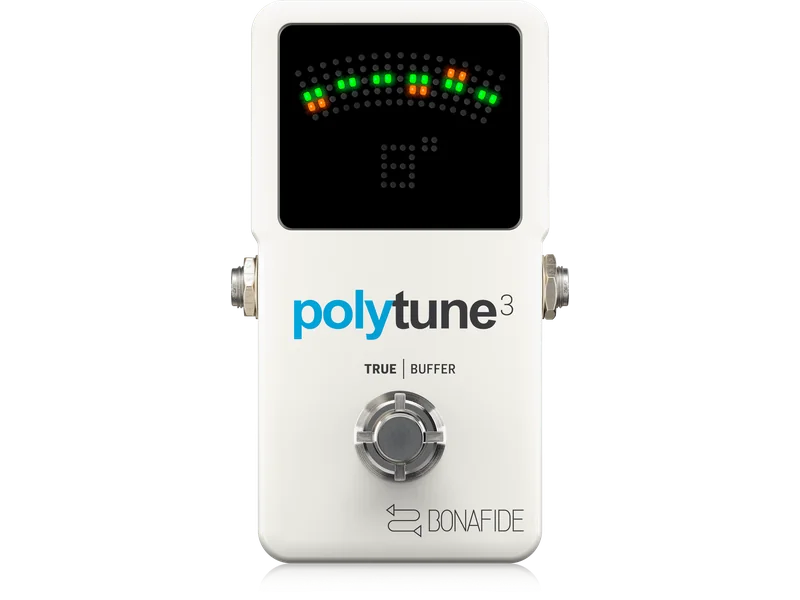
Pedal Tuners — The most common on stage. They offer bright displays, multiple tuning modes, and most importantly: a mute switch. This allows you to tune in complete silence—the audience doesn't hear your "E-A-D-G-B-E" soundcheck. Additionally, quality pedal tuners (like the Boss TU-3) feature a high-quality buffer that "strengthens" your signal, ensuring your tone stays bright and clear through long cable runs and multiple pedals.
Clip Tuners — Attach to your headstock and detect pitch through vibration rather than sound. Brilliant for noisy environments and easy to see while playing. However, clip-ons don't mute your amp, which is why they're not the pro stage standard. They're excellent for acoustic practice or home use.
Strobe Tuners — The most accurate (down to 0.1 cent). Use a spinning display that shows even tiny vibrations. Essential for precise setup and intonation work, but overkill for regular playing. Consider this the "Ferrari" of tuners.
Display Types: Needle/LED vs. Strobe
Don't confuse display types with tuner types. A Chromatic tuner can have a Needle/LED display OR a Strobe display.
Needle/LED Display: Shows your note with lights or an analog needle. "Good enough" for quick tune-ups on stage.
Strobe Display: An ultra-precise spinning display that reveals even the tiniest vibrations in your pitch. Use this for recording or intonation adjustments.
Buffer vs. True Bypass
For tuners, buffers are actually a good thing. Because the tuner is almost always the first pedal in your chain, a high-quality buffer (like the Boss TU-3 or TC Polytune 3) acts as a "signal scout." It strengthens your signal so it doesn't lose high-end frequencies as it travels through the rest of your pedals and long cables to your amp.
Skip the "true bypass" debate for tuners—focus on signal quality instead.
The Innovation: Polyphonic Tuning
The TC Electronic Polytune introduced polyphonic tuning—the ability to strum all six strings at once and see exactly which ones are out of tune. This is a massive time-saver for live performance, especially for emergency mid-song tuning adjustments. You can retune without playing the notes individually.
What to Look For
Display Brightness — Can you read it clearly on a dark stage?
Mute Switch — For live performance, the ability to tune silently is essential.
Tuning Range — Does it handle drop D, 7-string, 12-string, or bass?
Buffer Quality — If it's your first pedal, a high-quality buffer keeps your signal strong.
The Bottom Line
For live performance, a pedal tuner with a bright display and mute switch is the standard. For home practice and setup, a clip tuner is convenient. For precise intonation work, a strobe tuner is non-negotiable. Most professionals own at least two—a reliable pedal tuner for the road and a strobe for setups.
Next Step
Now that you understand tuner types, explore the creative tool that layers your ideas.
Read Part 10: Using a Looper for Practice & PerformanceIf you found this useful, consider buying us a coffee
Support the project